

Web strategy
A useful website for a local service business
What laundries, cleaning companies and other local businesses should explain before asking a customer to call.
February 2026
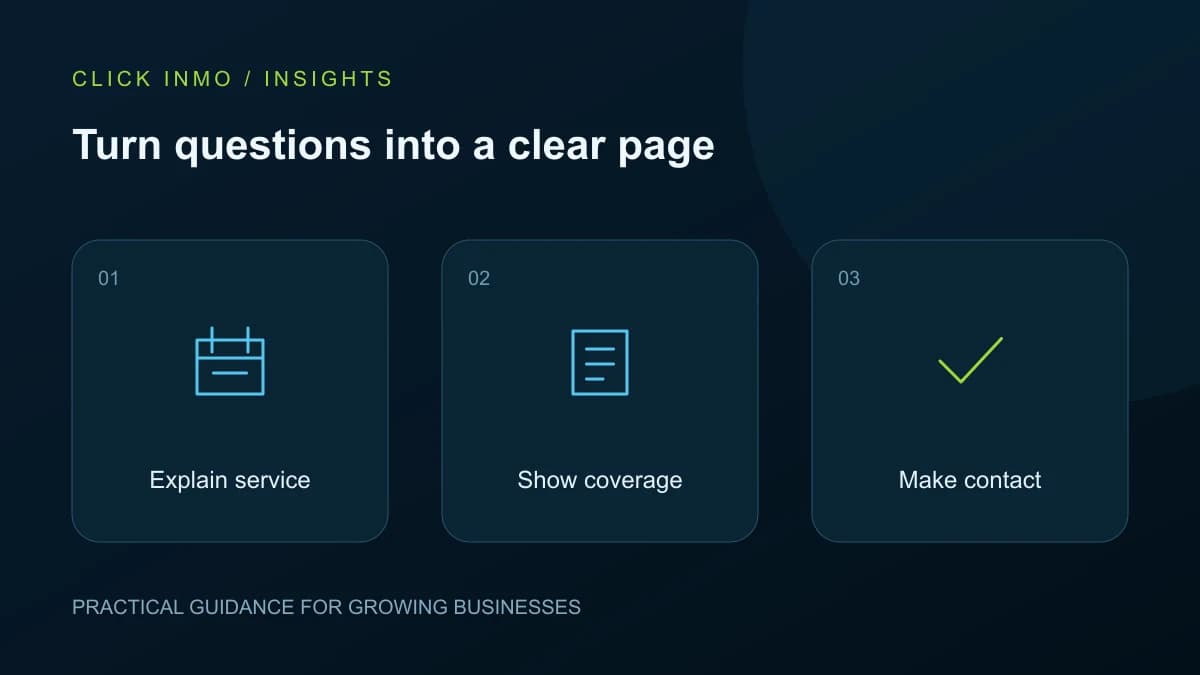
A person searching for a local service usually has a practical question. Can this company collect from my area? Do they handle this type of work? How do I request a price? A service website should answer these questions before trying to impress visitors with a large amount of content. For a laundry, cleaning company or repair business, clarity can be more useful than a complicated homepage.
Describe the service in customer language
Use names customers recognise. Explain the task, what is included and what may need a separate quotation. A laundry could distinguish normal washing from specialist garment care. A cleaning company could explain the difference between a routine visit and a deep clean. Avoid making every service sound identical.
Include limitations where they affect the decision. If you need to inspect an item before confirming the work, say so. Clear boundaries reduce unsuitable enquiries and help the team provide more accurate answers.
Make location and coverage practical
Show the business location and describe genuine service areas. If collection depends on a route or minimum order, explain that in plain language. A list of place names without any operational detail is not enough. Customers should understand whether you can help them before filling out a long form.
Keep the phone number, address and opening information consistent with the business's public profiles. Check the map link from a phone and ask someone unfamiliar with the premises whether the directions make sense.
Ask for the information needed to reply
Design the enquiry form around the decision staff must make next. A cleaning enquiry might need property type, approximate size, location and preferred timing. A repair enquiry might benefit from a short description and a safe way to provide a photograph. Do not demand unrelated personal information just because a template includes the field.
Show a clear confirmation after submission and identify who receives the enquiry internally. Test delivery to the business inbox. Keep an alternative contact route visible for someone who cannot complete the form.
Use evidence that customers can understand
Show genuine photographs of your work, process or premises when you have permission. Explain the situation behind a result rather than adding an unexplained gallery. Customer feedback should be authentic and represented accurately. Do not invent case studies to fill an empty section.
After launch, keep a record of repeated questions. Add answers where they belong, update service information when operations change and remove expired offers. A useful local website becomes clearer over time because it reflects the questions real customers ask.
Your next steps
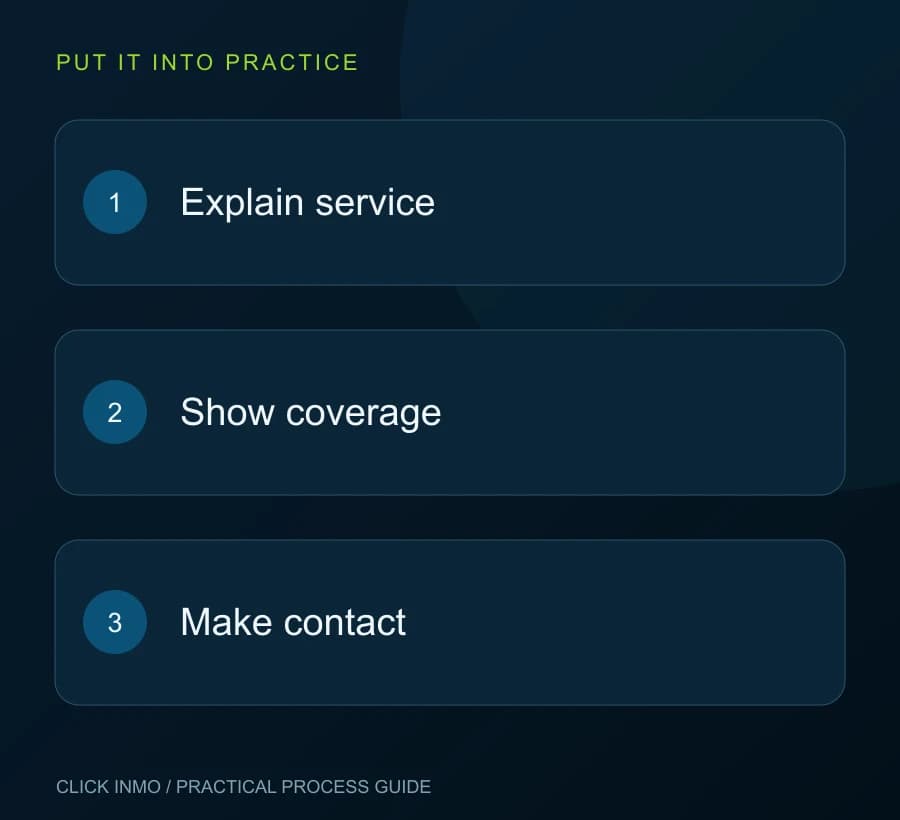
- Explain inclusions and limits for each main service.
- Describe real coverage and collection conditions.
- Ask only for useful enquiry details.
- Keep contact information and evidence current.
Want help putting this into practice? Explore the relevant service and tell us what you would like to improve.