

Hospitality photography
Hotel photography should help guests choose with confidence
Plan a useful hospitality photo library that shows the real room, the experience and the details a guest needs before booking.
July 2026
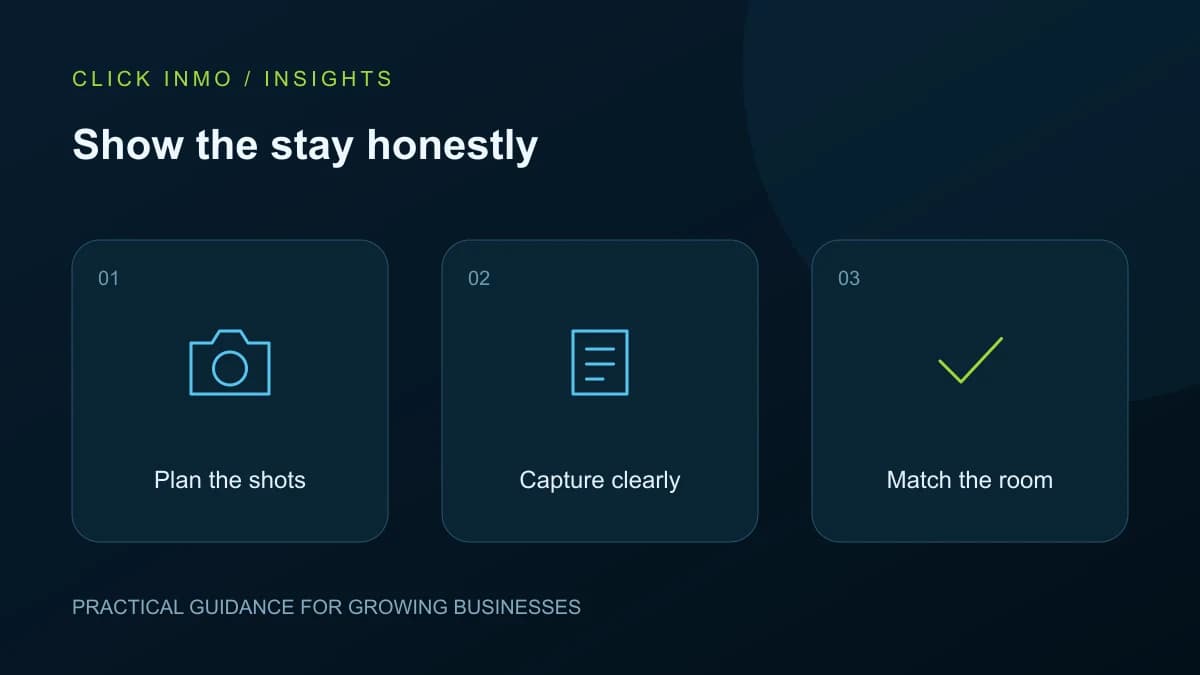
Before a guest experiences your hospitality, they see your photographs. A dark bedroom, a confusing angle or a gallery with no bathroom can leave questions unanswered. That does not prove the property is poor. It means the guest has less information to work with. Hospitality photography should make the real experience easier to understand, from the size of the room to the atmosphere of the shared spaces.
Start with questions, not camera equipment
Write down what guests need to know before choosing a stay. Can two people work comfortably in the room? What does the bathroom look like? Is the balcony private? Is the pool shared? Turn those questions into a shot list. For a hillside property, show the access and the view honestly; for a city hotel, include the entrance and useful arrival details.
Separate essential coverage from promotional images. A beautiful breakfast close-up may support a campaign, but it cannot replace a clear view of the room someone is about to reserve.
Prepare the property before the shoot
Clean and arrange the spaces as they should normally appear for guests. Check light bulbs, curtains, bedding, mirrors and visible cables. Schedule rooms so the photographer can work without interrupting occupied stays. Plan around natural light, but include a realistic evening scene when that is part of the experience.
Agree which room types will be photographed and label the files during production. Otherwise, a strong image can end up attached to the wrong booking option. A simple room checklist is often more valuable than adding another unplanned camera angle.
Improve clarity without inventing the experience
Exposure and colour correction can help a photo represent the space accurately. Editing should not add a sea view, remove a permanent obstruction or make a modest room look dramatically larger. Avoid AI-generated room images as evidence of an actual property. The guest needs to recognise the place they paid for when they arrive.
Use wide views to explain the layout and closer details to show texture or useful facilities. Keep a balanced set rather than relying entirely on dramatic aerial views. Drone footage can explain the setting, but it does not answer every question about the stay itself.
Build a library the team can actually use
Deliver organised folders for room types, dining, exterior and shared spaces. Keep original files and prepare suitable exports for the website, booking platforms and social posts. Record usage permissions and arrange consent before showing identifiable guests or staff. Make sure the person updating listings knows which images are current.
Refresh the library after meaningful changes such as a renovation, new room category or altered facilities. Review photos alongside recurring guest questions. If people keep asking about the bathroom or access route, add clear coverage of that detail rather than simply replacing the cover image.
Your next steps
- Create a shot list for every room category.
- Prepare spaces as guests will actually receive them.
- Keep edits truthful and room labels accurate.
- Export and organise images for each channel.
Want help putting this into practice? Explore the relevant service and tell us what you would like to improve.