

Hotel marketing
Why hotel marketing gets attention but not bookings
A practical review of the gaps between discovery, trust and a confirmed stay for Sri Lankan hotels, villas and guesthouses.
October 2026
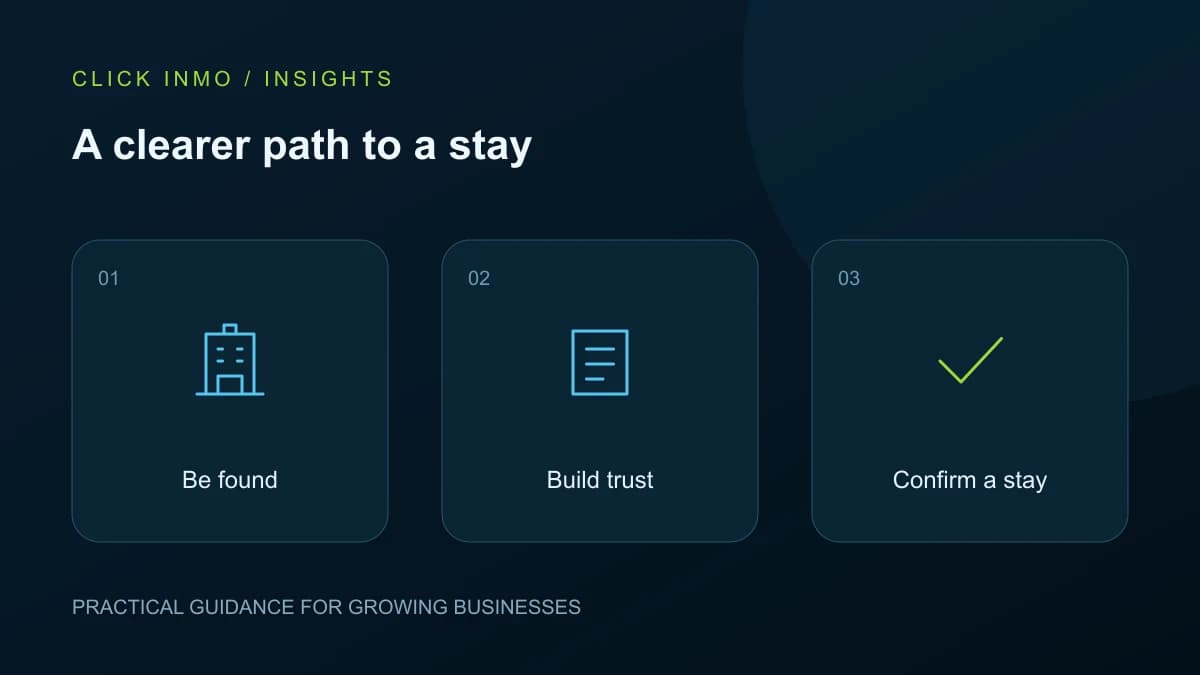
A hotel can have attractive rooms and an active social page yet receive few useful enquiries. Before increasing the advertising budget, follow the journey a guest takes. Can they find the right property, understand the room, confirm the price and get an answer? A weak link between these steps can waste attention that the business has already paid for. Digital marketing is only one part of hotel performance, but it is a part an owner can inspect and improve.
Start with one real guest journey
Choose a guest you want to reach, such as a couple planning a weekend in Nuwara Eliya or a family visiting the south coast. Use a phone to follow an advertisement, open the website, compare a room and send an enquiry. Record each point where information is missing. Do not test only from the office Wi-Fi or a desktop screen.
Look for practical questions: Is breakfast included? Is there parking? Which room fits the family? How far is the property from the landmark? A beautiful video cannot answer every question, so connect it to a page that can.
Make the offer consistent everywhere
A guest should not see one room name on Instagram, another on Booking.com and a third on the website. Build a simple reference sheet for room names, occupancy, facilities, inclusions and contact details. Ask one person to approve changes before the team updates each channel. If an offer expires, remove it from the landing page as well as the original post.
Use photographs of the actual room being sold. A photo of the best suite beside a standard room price creates expectations the property may not be able to meet.
Treat the reply as part of the campaign
Assign enquiries to a person and agree a realistic response routine. A saved reply can collect dates, guest count and room preference, but someone still needs to confirm availability. Avoid sending a generic price list when the guest has already asked a specific question. Keep a record of the enquiry and its outcome so the next shift can continue the conversation.
Do not call every message a booking. Separate general questions, qualified enquiries, confirmed reservations and cancellations. This helps you see whether the problem is attracting the wrong audience or losing suitable guests during follow-up.
Improve the weak step before buying more traffic
Review a small set of recent enquiries each week. Note where they came from, what they asked and why they did not continue, when that reason is known. If many people ask about a facility, explain it on the page. If guests stop after seeing the total, make charges and inclusions clearer earlier. Test one change at a time and compare similar periods; seasonality and availability can also change results.
Your next steps
- Test one complete booking journey on a phone.
- Align room information across the website and booking channels.
- Assign an owner to every enquiry.
- Measure confirmed stays separately from messages.
Want help putting this into practice? Explore the relevant service and tell us what you would like to improve.