

Booking operations
Keep hotel booking channels consistent without daily confusion
Organise room names, inventory changes and reservation handovers across your website and booking platforms.
November 2025
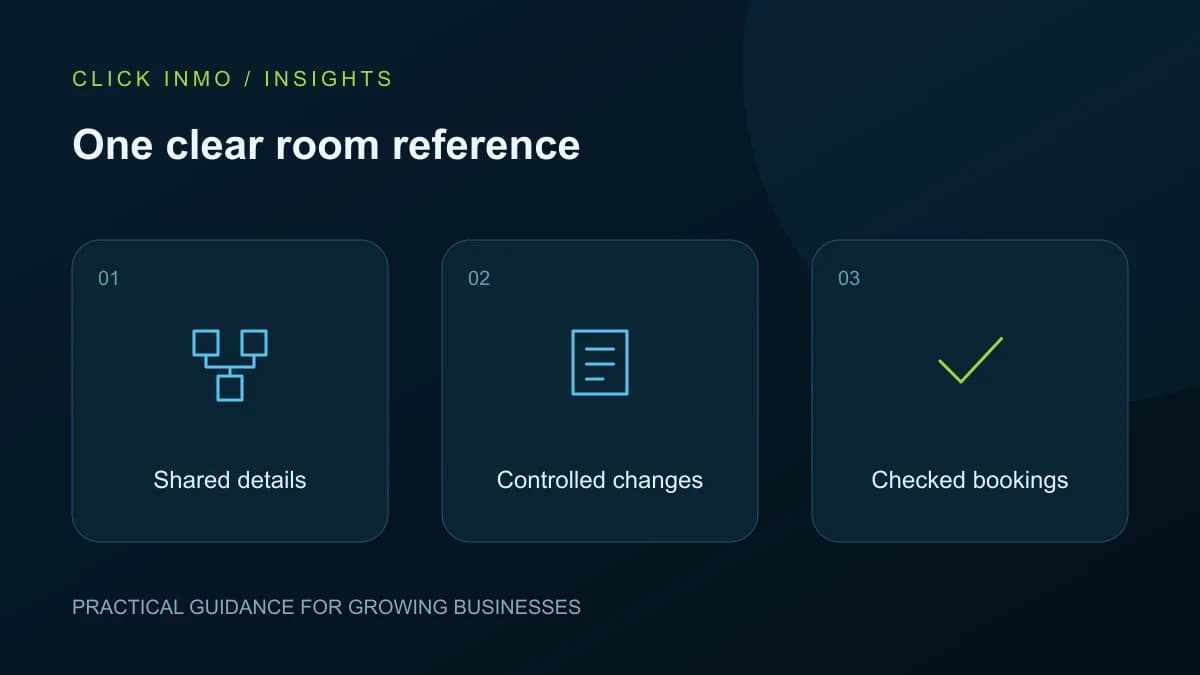
A hotel may receive reservations from its website, booking platforms, telephone calls and social messages. When those channels use different room names or separate records, staff can spend more time checking facts than helping guests. Better booking management begins with clear information and responsibility. Software can help coordinate the work, but it cannot decide which information is correct when the underlying records disagree.
Create a shared reference for the property
List the room categories, occupancy, bed arrangements, facilities and approved names in one maintained document or system. Identify which physical rooms belong to each category. Check that the website and booking channels use equivalent descriptions, even when their interfaces display the information differently.
Keep pricing rules and package inclusions alongside the relevant room information. Record who can approve a change. This reduces the chance that a temporary offer becomes a permanent promise because one channel was not updated.
Define how inventory changes move between channels
A direct telephone booking should enter the same operational process as an online reservation. If someone blocks a room for maintenance, that restriction needs to reach every place where the room can be sold. Map the current process before adding another tool, and identify steps that rely on a person remembering to send a message.
Where a channel manager or integration is used, test room mappings, rate plans and restrictions carefully. Do not assume that every field synchronises in the same way. Document any updates that still require manual work and keep a routine for checking failures.
Make shift handovers readable
Staff should be able to see the reservation source, dates, room category, status and any approved request without searching several chat groups. Distinguish a pending enquiry from a confirmed booking. Record changes in a way that shows what happened and who needs to act next.
Avoid putting unnecessary guest details in broadly shared documents. Give staff access appropriate to their role and agree where sensitive information belongs. The goal is a useful operational record, not a copy of every message in every system.
Review exceptions as well as normal bookings
Test cancellations, date changes, unavailable rooms and failed synchronisation. A workflow that handles only the happy path may look efficient during a demonstration but cause confusion during a busy weekend. Decide who resolves an exception and how the rest of the team learns that it has been resolved.
Hold a short weekly review of mismatched information and manual corrections. Fix the source of a repeated problem rather than asking staff to remember another workaround. Start with one property or room group if that makes a process change safer to introduce.
Your next steps
- Maintain one approved room and facilities reference.
- Map every source of reservations and inventory changes.
- Record ownership of manual updates and exceptions.
- Test cancellations and date changes before relying on automation.
Want help putting this into practice? Explore the relevant service and tell us what you would like to improve.