

AI integration
What an AI assistant can realistically do for a hotel
Start with approved guest information, clear limits and a human handover before automating hotel conversations.
April 2026
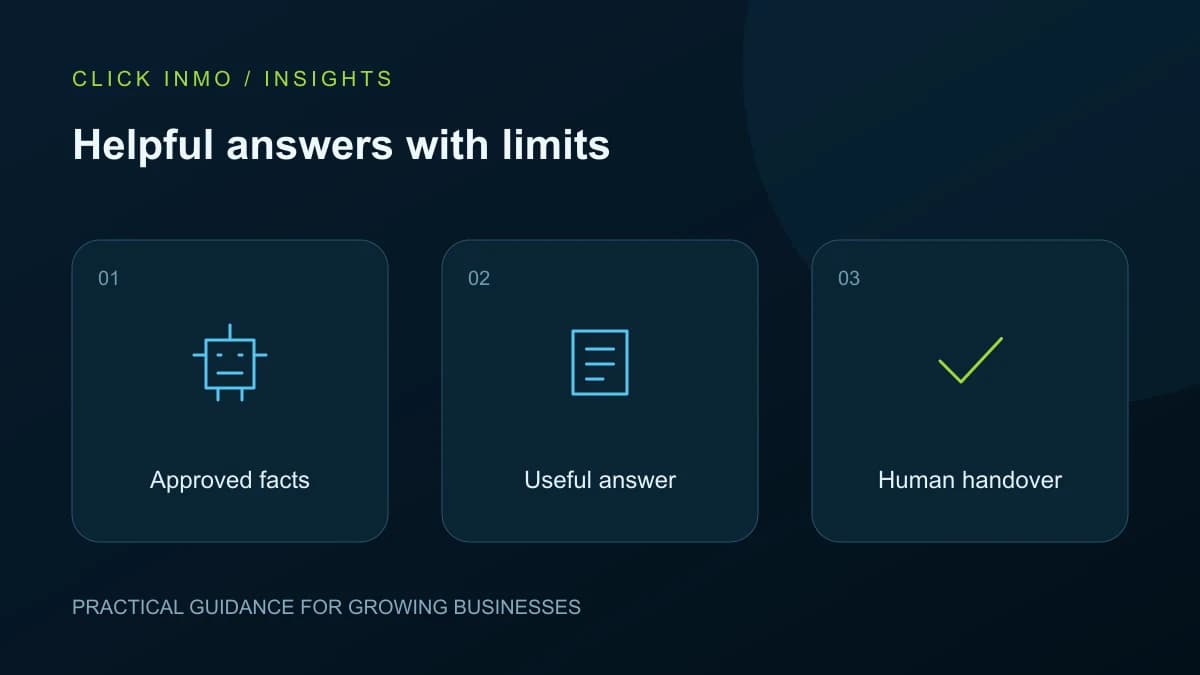
Hotel teams answer many of the same questions: check-in times, parking, breakfast and directions. An AI assistant can help organise those answers and respond when staff are busy. It should not guess a room rate, invent a facility or promise a reservation it cannot verify. The starting point is a small, reliable information service, not an attempt to replace every conversation at reception.
Choose a narrow first use case
Begin with questions whose answers are stable and approved. These might include arrival instructions, facility hours and how to request a transfer. Separate factual answers from requests that need a staff decision, such as a refund, special rate or late checkout. A clear boundary makes the first version easier to test and maintain.
Building a business assistant does not always mean training a new AI model. It can use an existing model with an approved knowledge source and carefully controlled tools. Choose the approach according to the task, the information involved and the available budget.
Give the assistant a reliable information source
Create an approved information set with an owner and a review date. Remove contradictory documents and label exceptions clearly. If breakfast hours differ on a public holiday, the assistant needs that distinction. Test the answers against the public website and booking information so guests do not receive conflicting instructions.
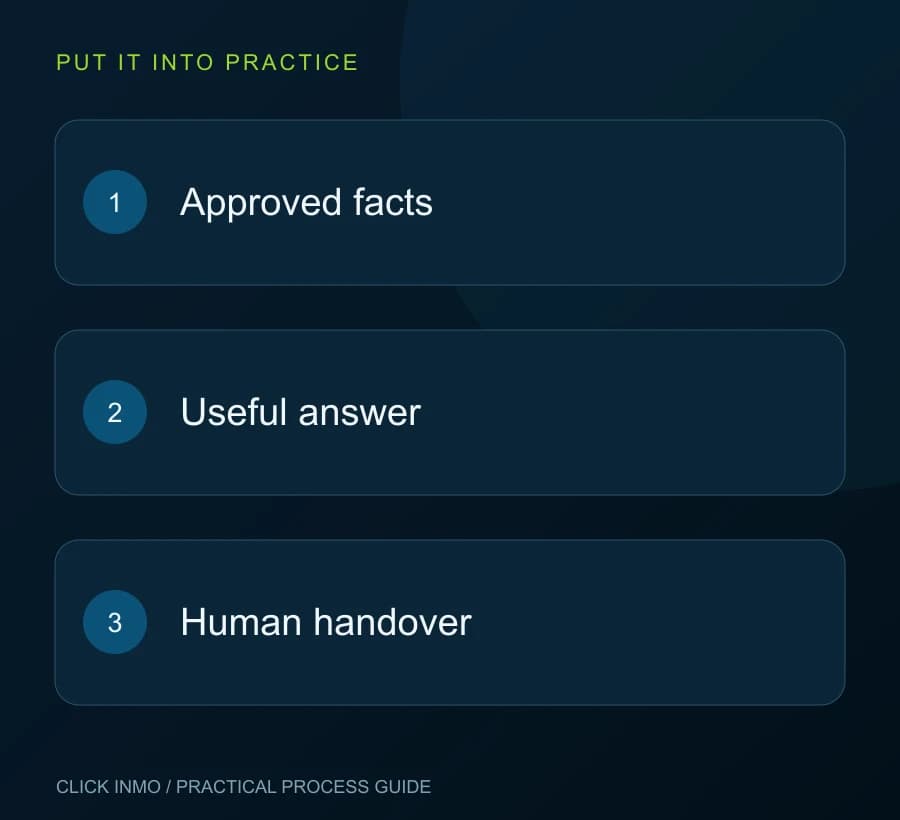
Decide what the assistant should say when it cannot find an answer. A clear request to contact reception is better than a confident invention. Give staff an easy way to flag an incorrect answer and correct its source.
Keep reservations and private data under control
If the assistant is connected to availability or a reservation system, define exactly what it can read and change. Answering a question and confirming a booking are different permissions. Require suitable checks before any action that affects a guest's reservation, and provide a visible confirmation of what actually happened.
Only collect information needed for the task. Explain where enquiries go and review the provider's data handling before deployment. Do not place passwords, payment details or unrestricted internal documents in a general knowledge folder. Give users a clear route to a person for sensitive issues.
Test conversations, not just a demonstration
Prepare sample questions with spelling mistakes, incomplete details and requests outside the assistant's scope. Test English, Sinhala or Tamil only if those languages are part of the supported service. Include cases where the information is unavailable or contradictory. Ask a staff member to check whether the answer is useful and accurate.
Review incorrect answers and failed handovers after launch. Track the questions the assistant resolves and those passed to staff. Expand its role only when the team can maintain the information and handle exceptions reliably.
Your next steps
- Start with a small set of approved questions.
- Assign an owner to the knowledge source.
- Separate information access from booking permissions.
- Test uncertainty and human handover before launch.
Want help putting this into practice? Explore the relevant service and tell us what you would like to improve.